


Karwa Chauth
Home / Karwa Chauth 2026: Date, Moonrise
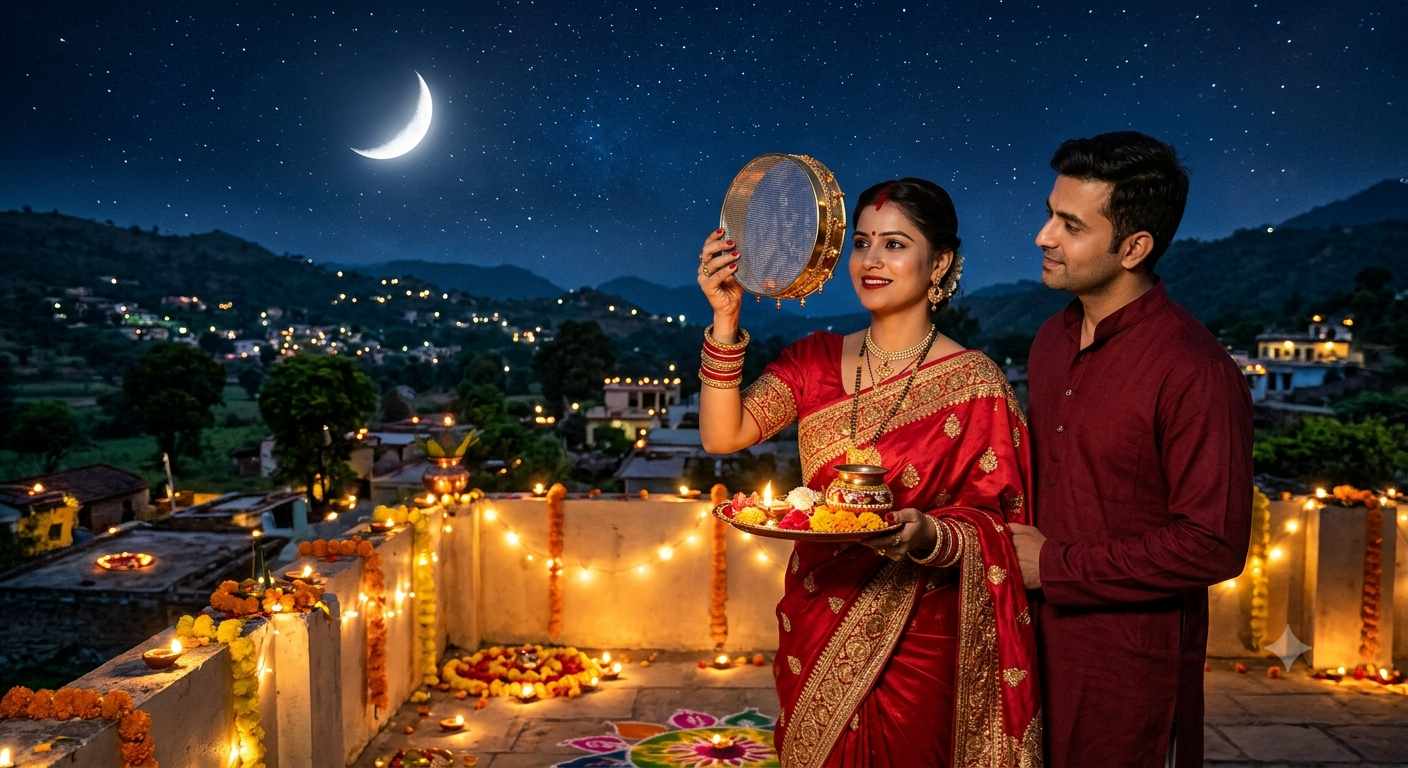
Karwa Chauth falls on Thursday, 29 October 2026. On this day, married women fast from sunrise to moonrise and pray for their husband’s long and healthy life. To many people, it looks like a day of hunger. But our elders built every step of this festival with care. Each ritual has a reason, and each one carries the same wish: a long and happy married life.
In this guide, you will learn where Karwa Chauth comes from, what each ritual means, and how the festival itself works as a simple form of manifestation.
Manifestation is a modern word. In simple terms, it means three things: knowing clearly what you want, believing in it, and taking steps towards it.
Our grandmothers never used this word. They had their own: sankalp. A sankalp is a firm promise you make with your whole heart. Karwa Chauth is built around one such promise.
Look closely at the festival, and you will see that it follows the same steps:
There is also a logical side to this. Researchers at Harvard Business School have studied rituals for years. In a 2014 study, Michael Norton and Francesca Gino found that people who performed a ritual after a loss felt more in control and coped better. In a 2016 study, the same team found that rituals lowered anxiety and helped people perform better under pressure.
The key finding was this: a ritual works best when you believe in it and do it with meaning. That is exactly what Karwa Chauth asks of you.
You do not need anything extra. Just follow the festival with awareness:
The name comes from two words. Karwa means a clay pot with a spout, and Chauth means the fourth day. The festival falls on the fourth day of the waning moon in the month of Kartik. Old texts call it Karaka Chaturthi.
Historians and elders share three possible roots:
Karwa Chauth follows a simple order from dawn to moonrise. Here is the full day at a glance, with timings for Gurugram on 29 October 2026.
| What it means | Rituals | What it means |
|---|---|---|
|
Day Before |
Mehndi and baya. Women apply mehndi. Parents send a gift basket (baya) to their married daughter. |
Mehndi stands for joy and a strong bond. Baya carries the parents’ blessings. |
|
4:47 – 5:39 AM |
Sargi. Eat the meal sent by the mother-in-law: pheni, fruits, dry fruits and sweets. |
Gives energy for the fast and carries the mother-in-law’s blessing. |
|
Before sunrise (about 6:30 AM) |
Sankalp. Bathe, fold your hands and promise to fast until moonrise. |
The wish becomes a promise. |
|
Through the day |
The fast and solah shringar. Fast without food or water, rest, and dress as a bride in red. |
The fast and solah shringar. Fast without food or water, rest, and dress as a bride in red. |
|
5:39 – 6:57 PM |
Evening puja. Worship Gaura Maa (Parvati), pass the thalis in a circle seven times, exchange karwas and listen to the katha. |
Women pray together, so the wish grows stronger. The katha teaches faith and patience. |
|
After puja |
Baayna. Offer a plate of sweets and gifts to the mother-in-law and touch her feet. |
Respect for the husband’s family. |
|
Moonrise (about 8:18 PM) |
Arghya and channi. Offer water from the karwa to the moon, then look at the moon and your husband through a sieve. |
The moon stands for calm and long life. The sieve is believed to let only blessings pass. |
|
After Moonrise |
Breaking the fast. The husband gives the first sip of water and the first bite of food. |
Marriage is a partnership: she fasted for him, now he cares for her. |
Moonrise and puja timings can change by a few minutes.“See the full Karwa Chauth 2026 moonrise time in Gurugram and Delhi NCR”.
Pandits and elders follow a few special customs, depending on the region:
In the best-known story, Queen Veeravati’s seven brothers showed her a false moon so she would eat. She broke her fast, and her husband died. Through a year of true devotion, she won his life back. The lesson is simple: faith and patience protect what you love. Shortcuts do not. “Read more about the spiritual meaning of Karwa Chauth”
The thali feri songs list a few things women traditionally avoid on Karwa Chauth. A fasting woman does not do heavy housework, weave or spin thread, or wake someone who is asleep. The idea is simple: the day belongs to rest, prayer and calm. A quiet mind holds a wish better than a busy one.
The festival has grown with time. Today, many couples see it as a celebration of partnership, not only of sacrifice. Many husbands now fast with their wives, and some unmarried women fast to pray for a loving partner. In some families, unmarried girls break the fast after seeing the stars instead of the moon.
For a newly married woman, the first Karwa Chauth is special. She often receives a grand sargi and shringar items from her in-laws.
Traditionally, the fast is nirjala, without food or water. If you are pregnant, unwell or on medicine, please speak to your doctor first. A fast with water or fruit carries the same sankalp. The wish matters more than the hunger.
“Karwa” is the clay pot used in the puja, and “Chauth” means the fourth day after the full moon in the month of Kartik.
Yes. Many husbands now fast with their wives as a sign of equal love and support.
Many families break the fast at the official moonrise time after offering water towards the moon.
Traditionally, the fast is nirjala, without food or water. If you are pregnant, unwell or on medicine, please speak to your doctor first. A fast with water or fruit carries the same sankalp. The wish matters more than the hunger.

Home / Karwa Chauth 2026: Date, Moonrise

Learn the meaning of every Karwa Chauth