

Karwa Chauth
Home / Karwa Chauth 2026: Date, Moonrise
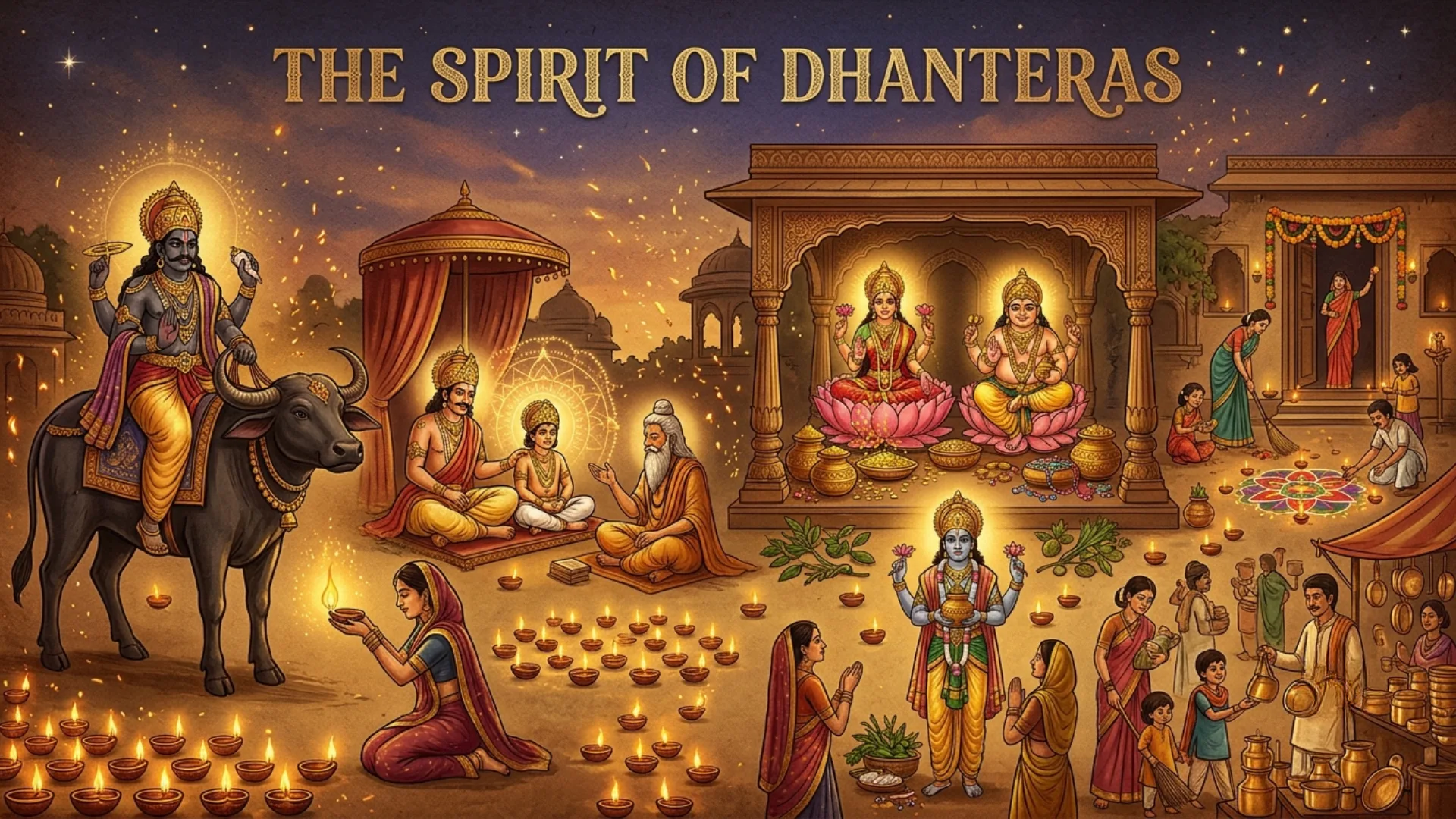
Every year on Dhanteras, jewellery shops fill up and people line up to buy gold, silver and
new utensils. It has become known as the day to shop. But the festival began with a much
deeper idea. Its stories speak of health, protection, family and gratitude, long before they
speak of gold.
Dhanteras falls on Friday, 6 November 2026. Before you head out to buy, here is what the
day truly stands for
| Detail | Time (Delhi NCR) |
|---|---|
|
Date |
Friday, 6 November 2026
|
|
Trayodashi tithi
|
10:31 AM, 6 November to 10:48 AM, 7 November
|
|
Pradosh Kaal and Yam Deepdaan |
5:32 – 8:09 PM |
|
Lakshmi–Dhanvantari puja
|
6:02 – 7:57 PM
|
Check your local panchang, as timings in Gurugram can differ by a minute or two.
The name has two parts. Teras means the thirteenth day, as the festival falls on the 13th
lunar day (Trayodashi) of the dark half of Kartik. The festival is also called
Dhantrayodashi
The Chaturthi tithi begins at 1:06 AM and ends at 10:09 PM on 29 October. Some calendars show 28 or 30 October, but in India the fast is kept on 29 October, because the tithi is present at sunrise and at moonrise on that day
Most people read Dhan as money. But the day is also called Dhanvantari Trayodashi, after
Lord Dhanvantari, the god of Ayurveda and healing. So the name carries two meanings at
once: the wealth of money, and the wealth of good health. Our elders placed health first,
because without it, no amount of gold can be enjoyed
Dhanteras is not built on one story but on three. Each one adds a different layer to the
meaning of wealth
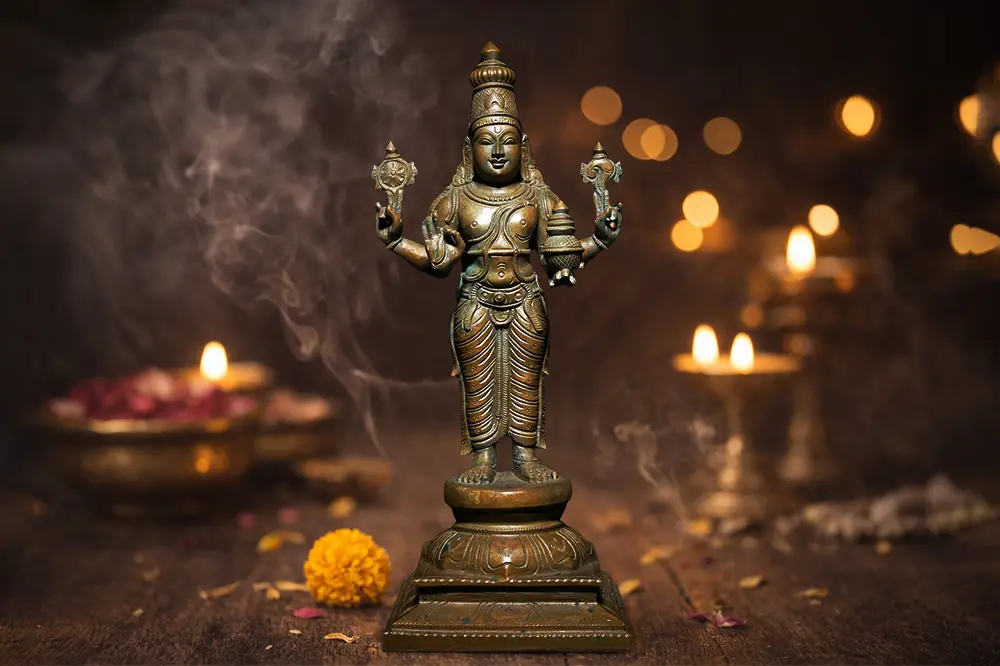
Long ago, the gods and demons churned the great ocean together to find amrit, the
nectar of immortality. This is the story of Samudra Manthan. Many treasures rose from
the ocean. Near the end, Lord Dhanvantari appeared, holding a pot of amrit in his hands.
He is honoured as the physician of the gods and the father of Ayurveda
What it teaches: True wealth begins with good health. This is why families pray to
Dhanvantari for a healthy year, and why the Government of India for several years marked
National Ayurveda Day on Dhanteras. It is also the reason we buy a new pot or utensil: it is
a reminder of the pot of amrit he carried
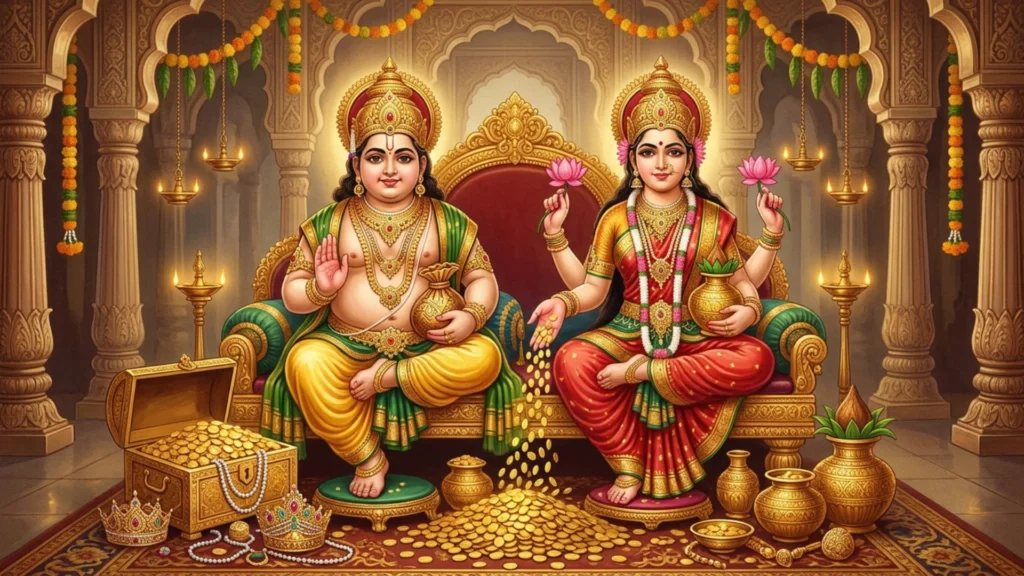
Dhanteras is the first day of Diwali, when families begin to welcome Goddess Lakshmi. In
the evening, they light diyas and offer prayers to her. Many homes also worship Lord
Kuber, the treasurer of the gods
What it teaches: Lakshmi brings wealth, but Kuber protects it. Together, they remind us
that earning money is only half the story. Saving it wisely and using it with care is the
other half. This is why the day is linked with sthir dhan, wealth that stays.
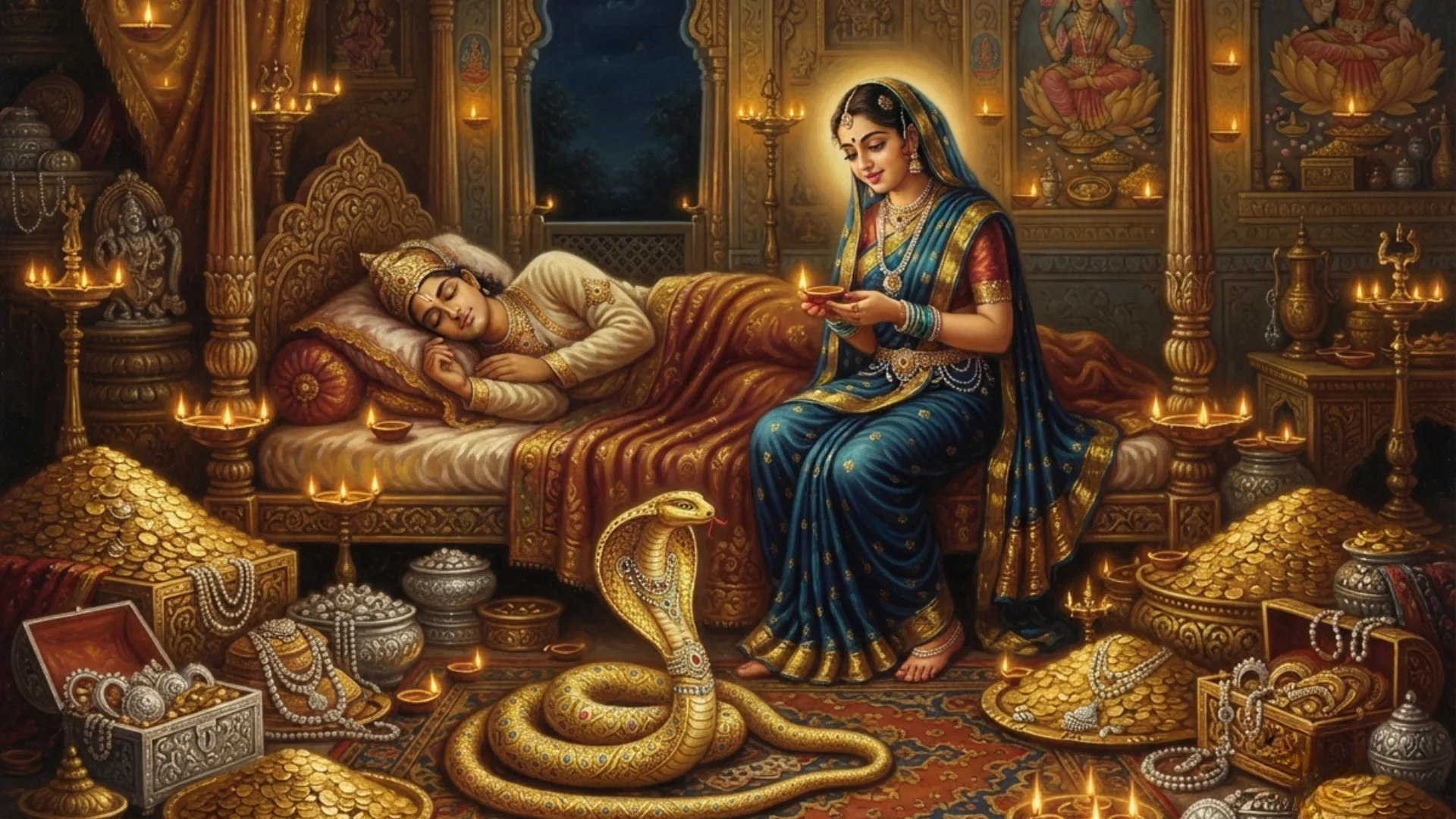
This is the story people know the least, yet it explains one of Dhanteras’s most beautiful
rituals
An old prophecy said that King Hima’s son would die from a snakebite on the fourth day of
his marriage. On that night, his young wife refused to let him sleep. She piled her gold and
silver jewellery and coins at the door of their room, and lit lamps all around. Then she sang
songs and told stories through the night to keep him awake
When Yama, the god of death, arrived in the form of a serpent, the bright light of the
lamps and the shining metal dazzled his eyes. He could not enter the room. He sat on the
pile of jewellery, listening to her songs, and quietly left at dawn. The prince was saved
What it teaches: Her courage, love and wisdom protected her family. The gold was not
used for show. It was used for protection. In her memory, families light a lamp for Yama on
Dhanteras evening, called Yam Deepdaan. The lamp faces south, the direction linked with
Yama, and is lit as a prayer that no one in the family meets an early death
Every traditional Dhanteras purchase connects back to these stories:
| What we buy | Where the idea comes from |
|---|---|
|
Metal pot or utensil
|
Dhanvantari’s pot of amrit. Tradition says to fill it
with rice, water or sweets before bringing it home,
so it never enters empty |
|
Gold and silver |
Lasting wealth that does not lose its worth, and the
shining metal that protected King Hima’s son. |
|
Broom (jhaadu)
|
A symbol of Lakshmi. Sweeping clears away dirt
and bad luck before she enters the home |
|
Whole coriander seeds (dhaniya) |
“Dhaniya” sounds like “dhan”. Families offer the
seeds in puja, and many sow them after Diwali,
hoping their wealth grows like the plant |
|
Clay diyas |
Light for the first night of Diwali, and the lamp for
Yam Deepdaan |
Notice that none of these needs to be expensive. A small brass pot, a broom or a packet of
coriander seeds carries the same meaning as a gold coin. If you would like to choose by
your birth number
The same day looks very different from region to region:
North India: Families shop for metal and utensils, clean the house, draw small Lakshmi
footprints at the door with rice flour and vermilion, and light the Yam Deepdaan lamp in
the evening.
Maharashtra: Families lightly pound dried coriander seeds with jaggery and offer this
as naivedya (food offering) to the goddess.
Rural India: Farmers decorate and worship their cattle, their most valued source of
income. Here, wealth means the animals that feed the family
South India: In many homes, women prepare a herbal medicine called marundu, which
the family takes before sunrise on Naraka Chaturdashi, the next day. It carries
Dhanvantari’s message of health into the festival
Jain tradition: The day is called Dhanya Teras, the “blessed thirteenth”. It honours
Bhagwan Mahavir, who entered deep meditation on this day before attaining moksha.
Here, the true wealth is spiritual.
Across all these customs, one idea stays the same: wealth means whatever sustains a
family, whether it is health, harvest, cattle, wisdom or gold
If you look at all three stories together, Dhanteras asks one simple question: what do you
want to protect and grow this year
1. Count your real wealth. Before you shop, take a moment to think of what already
sustains you: your health, your family, your skills, your home. Gratitude comes first.
2. Choose one wish. Health for a parent, peace at home, steady work. Hold one clear
intention.
3. Buy with that wish in mind. Let your purchase, however small, stand for that wish.
4. Light the Yam Deepdaan lamp. As you place it facing south, pray for the safety of
everyone you love.
5. Care for your health. Honour Dhanvantari in a practical way: book the check-up you
have been putting off, or start a small healthy habit.
No. Gold is one part of it. The festival also honours
health (Lord Dhanvantari), lasting wealth (Lakshmi and Kuber) and the protection of
family (Yam Deepdaan).
It comes from the story of King Hima’s
son, whose wife saved him from death with lamps and shining jewellery. The lamp is lit
facing south as a prayer for the family’s long life
A small brass or copper utensil, a
broom, coriander seeds or clay diyas. They carry the same meaning as gold.
Lord Dhanvantari for health, Goddess Lakshmi for
prosperity and Lord Kuber for keeping wealth safe. Yama is honoured with a lamp in the
evening.
If you would like guidance on what the coming year holds for your health, work or
relationships, you can talk to Adite in Palam Vihar, Gurugram, or online.

Home / Karwa Chauth 2026: Date, Moonrise
Learn the meaning of every Karwa Chauth
Home / Karwa Chauth for Modern Couples:
Home / More Than Gold: The Real