


Karwa Chauth
Home / Karwa Chauth 2026: Date, Moonrise
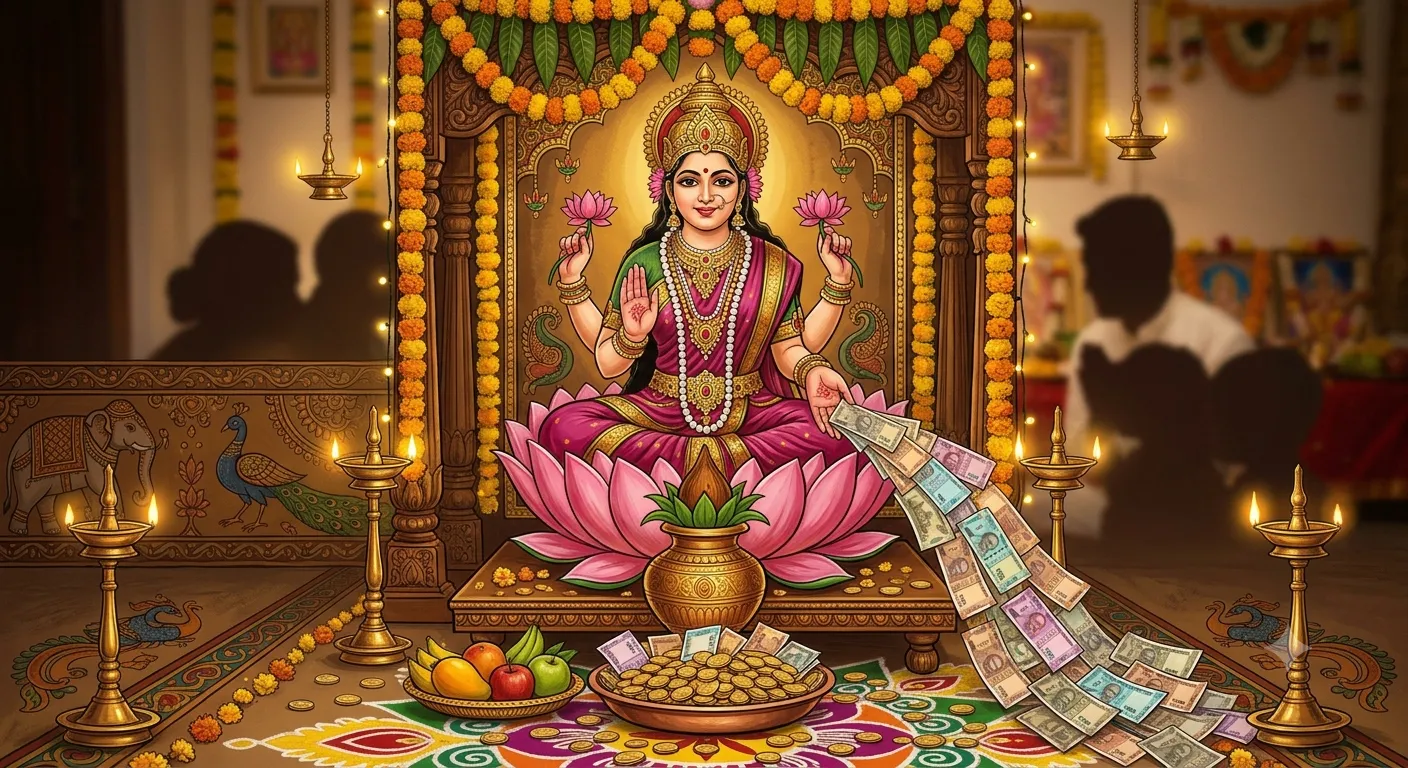
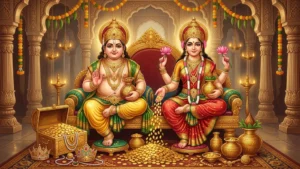
Lakshmi Puja brings families together to seek blessings for a secure and fulfilling life. Its meaning embraces financial well-being alongside nourishment, learning, generosity and the care we give one another.
For Diwali 2026, Lakshmi Puja falls on Sunday, 8 November. Drik Panchang lists the following timings for New Delhi, India. All times below are in Indian Standard Time (IST).
| Details | Timings |
|---|---|
|
Lakshmi Puja muhurat: |
Lakshmi Puja muhurat: |
|
Pradosh Kaal: |
5:31 PM to 8:09 PM |
|
Amavasya Tithi begins: |
11:27 AM on 8 November 2026 |
|
Amavasya Tithi ends: |
12:31 PM on 9 November 2026 |
These are New Delhi timings, not a single muhurat for every location. Check a local panchang or your family priest for the correct timing in your city. The evening muhurat is a specific period within the broader Amavasya Tithi; the two should not be treated as interchangeable.
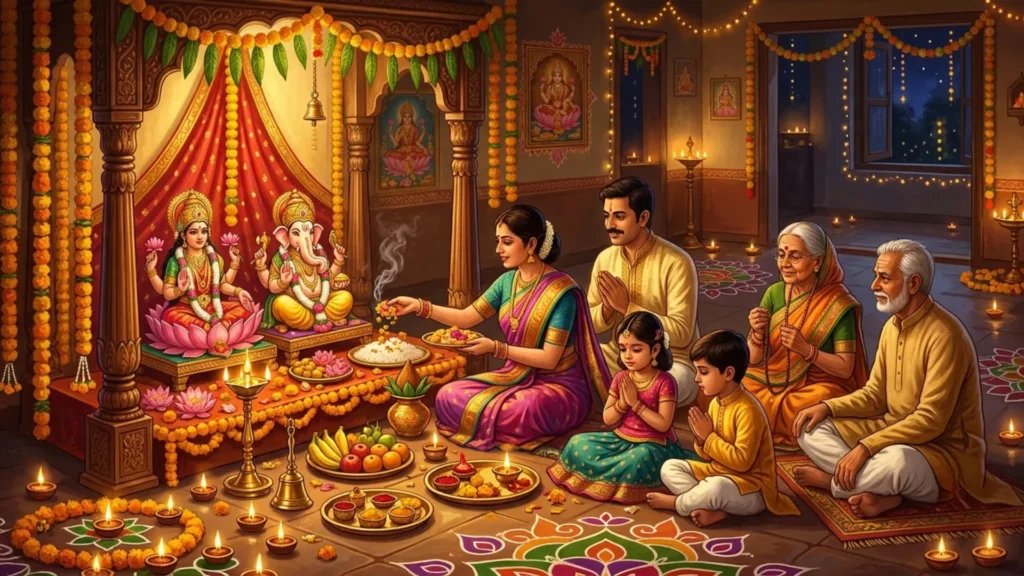
Before Lakshmi Puja, homes fill with preparation. Floors are cleaned, lamps are arranged and sweets are made ready for offering. Family members gather before the altar with hopes for a better year.
For many households, those hopes include paying bills comfortably, finding steady work or building a secure future. These wishes matter. Financial hardship calls for practical support, and devotion need not diminish the importance of earning a living.
Yet Hindu devotional traditions also understand prosperity more broadly. Goddess Lakshmi is associated with material abundance as well as qualities that sustain a meaningful life. Her worship offers a moment to consider what we have, what we need and how we use what we receive.
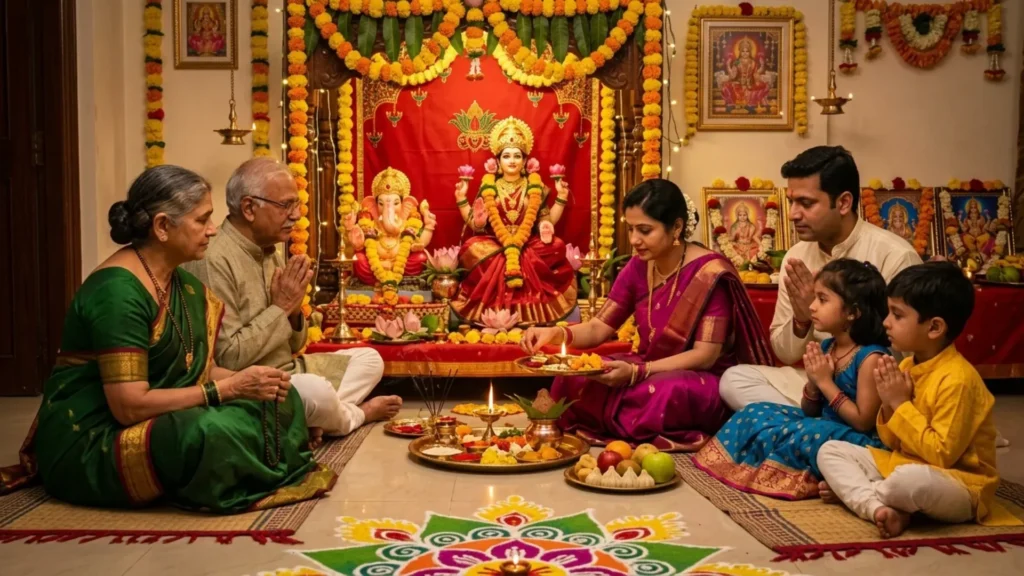
Diwali Lakshmi Puja is associated with the Amavasya observance and evening worship. Many families prepare a clean worship space, offer flowers, fruit and sweets, light lamps and perform aarti. Practices vary by region, community and household, so a familiar family tradition may differ from a published ritual guide.
In many homes, Lord Ganesha is worshipped before Goddess Lakshmi. Ganesha is invoked at auspicious beginnings, and the worship proceeds with offerings and prayers according to the household’s custom. A sankalpa, or statement of intention, helps give the observance a clear devotional purpose.
The glow of diyas, the preparation of offerings and the sharing of prasad make worship something a family participates in together. These acts also offer a way to pass traditions between generations: children learn by helping, listening and asking why each part matters.
Lakshmi worship is not limited to Diwali. In Bengal, Kojagari Lakshmi Puja is associated with the full moon of Ashwin. It is a distinct observance from Diwali Lakshmi Puja, with its own calendar and customs. Recognising this difference respects the diversity within Hindu practice.
Lakshmi’s different forms help express the many dimensions of abundance. Dhana Lakshmi is associated with material wealth, Dhanya Lakshmi with food and nourishment, and Vidya Lakshmi with knowledge. Devotional explanations also recognise courage and success as forms of wealth. Names and groupings differ across traditions.
These ideas feel close to everyday life. Knowledge can help someone find work or make an informed decision. Courage can help a person begin again after disappointment. Food sustains a household, while financial resources help people meet obligations and care for others.
A fuller understanding of prosperity leaves room for each of these needs. It also helps us recognise strengths that are easy to overlook when we measure progress only through income or possessions.
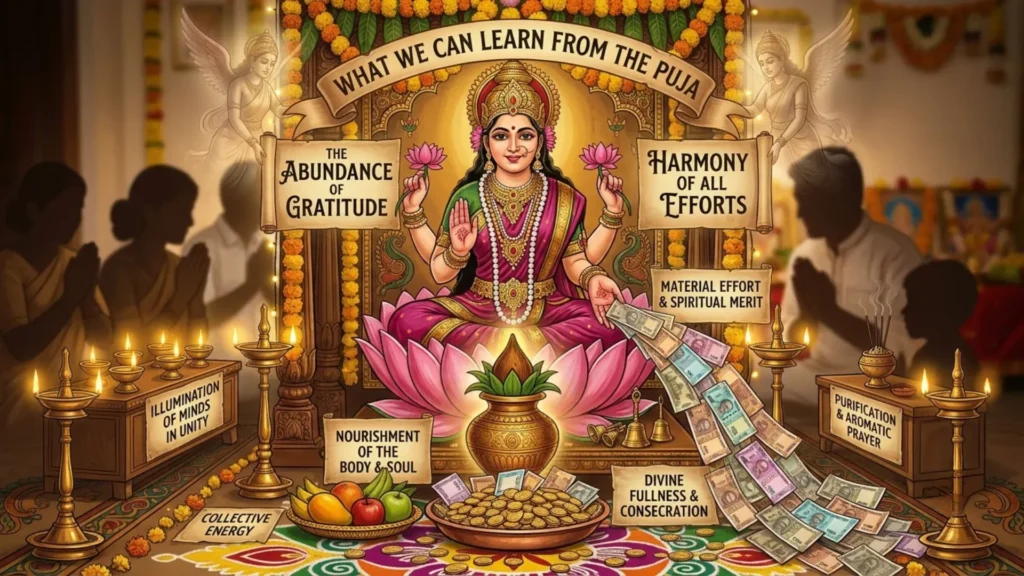
The following reflections are ways to bring personal meaning to the occasion. They are not additional ritual requirements or promises of a particular result.
Preparing the home can become a chance to repair useful belongings, reduce waste and make shared spaces more comfortable. An expensive celebration is not necessary to show care. Attention to what already supports our lives can be a meaningful expression of gratitude.
Think of someone who stood by you, a meal you were able to share or a lesson that helped you through uncertainty. Naming these blessings makes gratitude personal. It allows appreciation to sit alongside the wish for better circumstances.
Lakshmi Puja can prompt honest questions about earning and spending. Are we keeping our commitments? Are we treating the people who work with us fairly? Does our spending reflect our needs and values? These are personal reflections we can carry from worship into daily life.
Praying for prosperity can sit alongside practical action: learning a skill, organising household expenses, fulfilling an overdue responsibility or asking for help when it is needed. Religious observance does not guarantee financial outcomes.
A celebration becomes more meaningful when the people taking part feel included. Sharing preparation, calling an older relative or listening without distraction may matter as much to a family as the decorations.
Relationships also need care after the festival. A promise kept, a respectful conversation or a regular moment together can strengthen the sense of security we hope to find at home. When reflecting on abundance, we can ask whether we are giving and receiving that care.
Sharing can be modest and still useful. Offer a meal, help someone with a skill you have, donate useful belongings in good condition or contribute to a cause you trust. Choose something that fits your circumstances without neglecting your own essential needs.
Generosity gives our resources a purpose beyond possession. It reminds us that time, attention and knowledge can also be shared.
Choose one manageable action to follow the celebration. You might reduce avoidable food waste, set aside time for loved ones, review spending or return to a skill you have wanted to learn. A clear commitment is easier to sustain than a long list of changes.
When you sit for Lakshmi Puja, there is room to seek financial stability, opportunity and success. There is also room to reflect on the nourishment, relationships and inner qualities that make those opportunities worthwhile.
A personal prayer might be: May our home have enough to sustain us, kindness to connect us, and wisdom to use what we receive well.
That intention can remain part of everyday life long after the diyas have burned out.
Diwali is more than a festival of lights. It is a beautiful reminder of hope, prosperity, gratitude, and the importance of welcoming positivity into our lives.
As we decorate our homes with glowing diyas, beautiful rangolis, and fresh flowers, the tradition of worshipping Maa Lakshmi reminds us that true abundance is not only about wealth but also about peace, happiness, and harmony.
From cleaning our homes to offering prayers during Lakshmi Puja, every ritual carries a deeper message of renewal, devotion, and new beginnings.
This Diwali, welcome Maa Lakshmi with a grateful heart, cherish the blessings you already have, and make room for positivity, kindness, and brighter possibilities.
Wishing you and your family a blessed, peaceful, and prosperous Diwali.

Home / Karwa Chauth 2026: Date, Moonrise
Learn the meaning of every Karwa Chauth
Home / Karwa Chauth for Modern Couples:
Home / More Than Gold: The Real